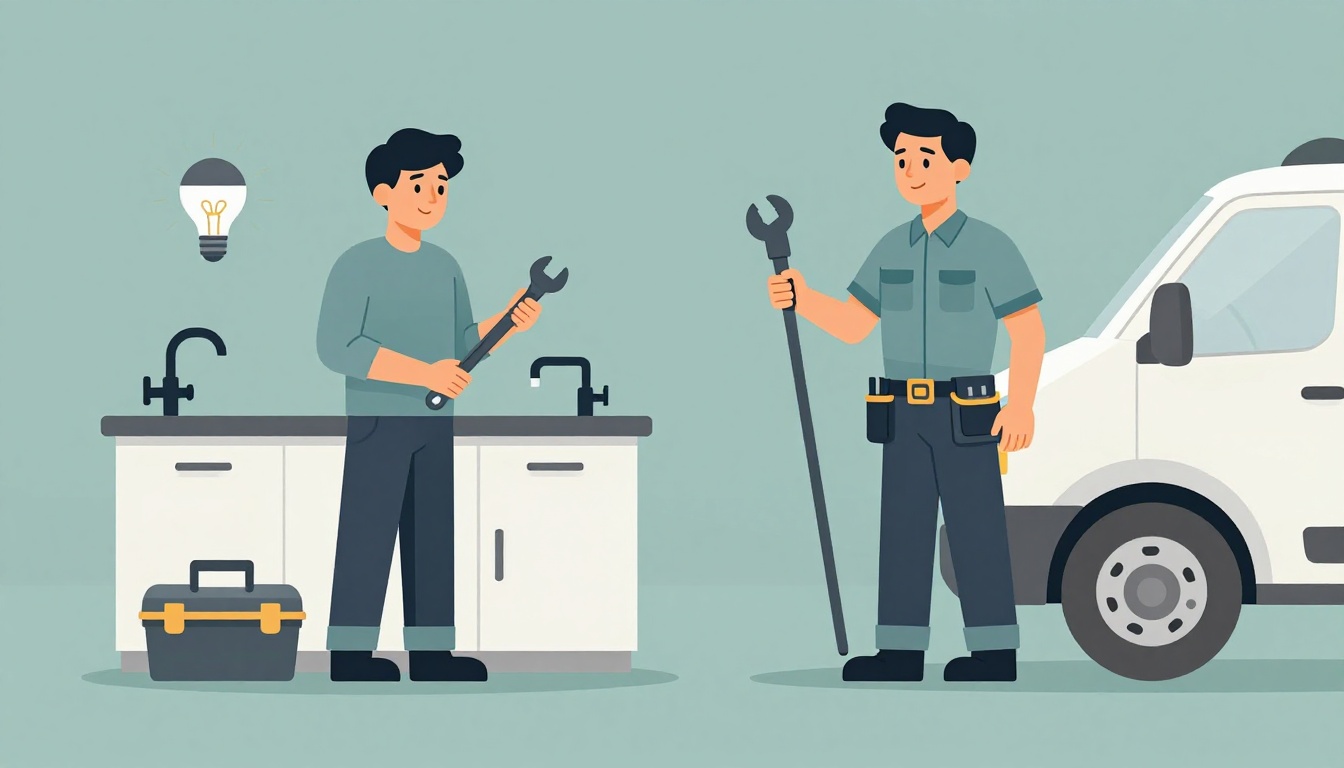
Picture this: You notice a drip from your kitchen faucet late at night. Grab a wrench and YouTube tutorial because you want to save cash, right? But hours later, water’s everywhere, and you’ve cracked the pipe, turning a $10 fix into a $500 plumber bill.
That’s the classic DIY vs professional help trap many face. You aim to cut costs and feel capable, yet one wrong move risks safety hazards, wasted time, or massive repair bills down the line. In 2026, stats show most folks mix it up: 28% handle simple tasks themselves but call pros for the tough stuff, while confidence now tops money as the main DIY driver.
This post breaks it down with key factors to weigh, real examples from leaky faucets and car troubles to minor health woes, fresh 2026 trends on outcomes and spending, plus a simple decision guide. So, when should you roll up your sleeves versus pick up the phone?
Do You Have the Skills, Tools, and Time? Key Factors to Check First
Before you grab that screwdriver, pause and ask yourself three big questions. Do your skills match the job? Got the right tools on hand, or will you splurge on new ones? And can you spare the time without it costing you elsewhere? These checks save headaches. In 2026, more people start DIY but switch to pros mid-project, with trends showing about 40% opting for full pro help to avoid delays. Pros often finish 2-3 times faster than full DIY efforts, thanks to their gear and know-how. Yet simple tasks can save you 20-30% if you nail them right the first time. Let’s break it down.
Matching Your Skill Level to the Task
Rate your skills straight up, no fluff. Think about past fixes. You handle basic oil changes because you’ve done a few in the driveway. But brakes? Leave those to pros; one slip risks your safety. Apps and YouTube channels make basics easier now. Drivers watch step-by-step videos on engine codes and simple swaps, boosting confidence for oil top-ups or filter changes, as noted in recent car repair trends.
Start small to test yourself. Swap a faucet washer first. It builds your chops without big stakes. If it goes smooth, level up. But if doubts creep in, call help early. Honest self-checks cut rework risks.
Weighing Time and Tool Costs
Time hits your wallet in hidden ways. That weekend oil change eats hours you could spend relaxing or earning overtime. Pros zip through jobs faster, often with warranties that cover mistakes. They charge $70-130 per hour for home repairs like plumbing (averaging $90), and around $100 for car work.
Tools add up quick too. A basic kit runs $200, but specialty bits for one job push it higher. Skip buying extras if you lack them; rent or hire out instead.
Consider this: Simple fixes save 20-30%, but botched ones double costs from fixes. For example, a DIY faucet might save $100 upfront, yet a leak means pro bills later. Pros guarantee speed and quality. So weigh your hours against their rates before starting.
Spotting High-Risk Problems That Demand Pro Help
Some fixes tempt you to dive in because they seem simple at first. However, certain issues carry big risks that make DIY a bad bet. You spot them by the stakes involved: safety threats, huge costs from mistakes, or damage that spreads fast. Pros handle these with tools, training, and insurance you lack. In short, call them when errors could hurt you, your home, or your wallet big time. Let’s look at key areas.
Safety First: Home Repairs and Car Fixes
Home jobs like roofing leaks or electrical work top the danger list. A bad roof patch fails quick, letting water rot your structure and spawn mold. Electrical tinkering sparks fires; stats show these cause thousands of blazes yearly, with electrical fires statistics highlighting how DIY wiring gone wrong leads to shocks or worse. Plumbing bursts from poor seals flood basements, and rework hits $300 to $1,000 easy.
About 34% of homeowners abandon DIY home projects mid-way because dangers mount or skills fall short. Falls from roofs kill, and wrong wires overload circuits. Pros spot hidden issues, fix them right, and offer warranties that shield your home’s value from future claims.
Cars demand the same caution, especially brakes or transmission. Faulty brakes fail in traffic, risking crashes; brake failure statistics note how poor repairs contribute to deadly stops. Transmission slips strand you or cause wrecks. Around 40% quit car DIY after realizing the complexity. Therefore, skip these. Mechanics test properly and guarantee safety, avoiding $300-plus do-overs.
Stick to pros here because one slip costs lives or thousands in damage.
Health and Tech: When Delays Hurt Most
Health symptoms don’t mix with guesswork; delays turn minor issues serious. A fever over three days means see your doctor fast, as it signals infection. Chest pain? Head to the ER right away, no delays or telehealth tries. ER visits average $1,000-plus, yet fever ER guidelines stress urgency for combos like fever with pain or breathing trouble. Telehealth works for mild stuff only, like short fevers without red flags.
Tech glitches hit hard too. A virus spreads if you DIY wrong, wiping data worth thousands. Hardware fails like bad drives mean total loss without backups. Simple scans succeed 60-70% of the time, but pros nail 90% on first try and charge $150 to $1,000 less in long-run fixes.
For example, skip home virus hunts; shops recover files safely. Health and tech reward quick pro calls because waits amplify harm. You save money and stress that way.
DIY Wins and Pro Smarts in Common Life Areas
You handle everyday fixes all the time, yet some jobs demand expert hands. Common areas like home repairs, cars, tech gadgets, health tweaks, and money matters offer clear splits. DIY saves cash on basics, but pros prevent big fails. For instance, 65% of homeowners tackled projects last year, with painting leading at 43%. However, structural work needs pros for safety and longevity. Let’s compare quick wins versus pro calls across these spots.
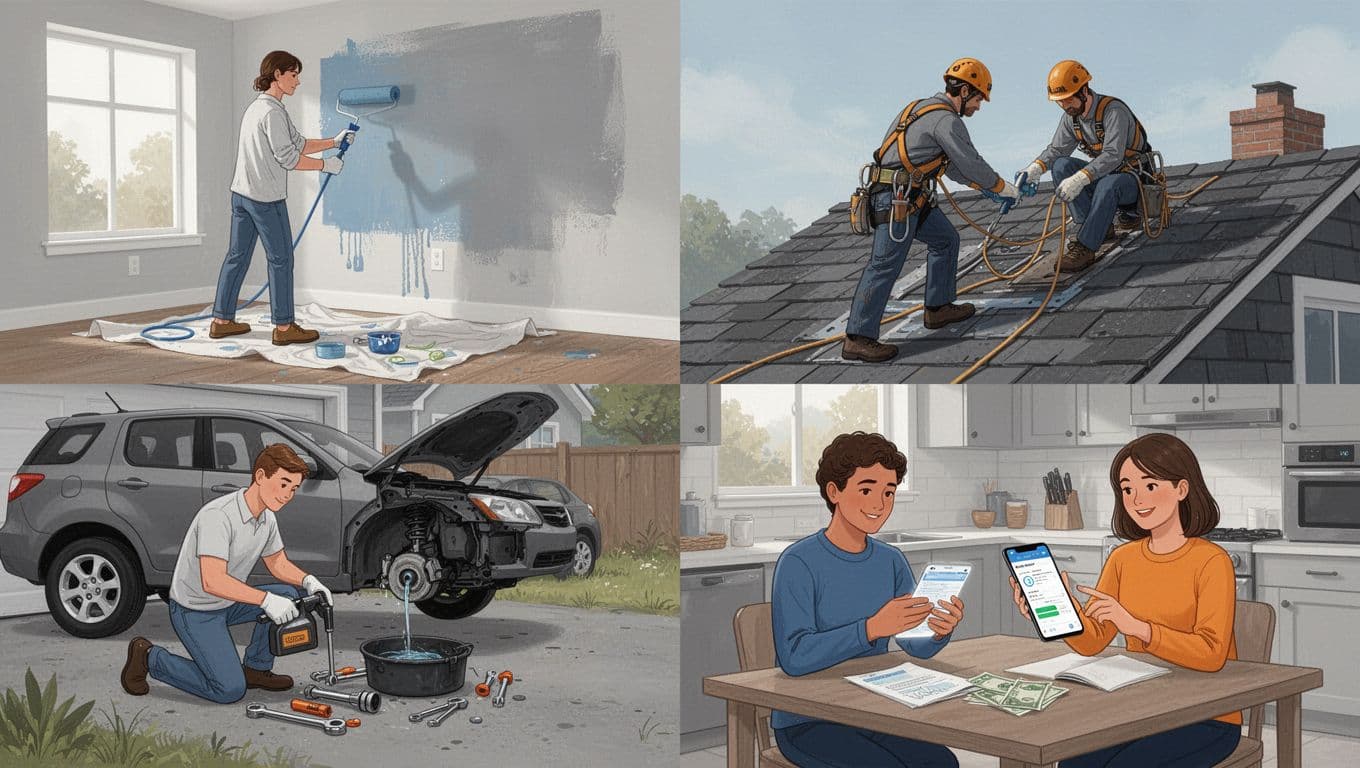
This table sums it up. It shows DIY sweet spots, pro musts, rough success rates from recent trends, and cost risks.
| Area | DIY Wins | Pro Smarts | Success Rate | Cost Notes |
|---|---|---|---|---|
| Home | Paint, decor, minor fixes | Roof, windows, structure | 65-66% | DIY fail: $500+ redo; pro: $200-400 job |
| Car | Oil change, air filter | Diagnostics, brakes | 70% basic | DIY saves $50-100; fail risks engine damage |
| Tech | Restarts, cache clear, updates | Hardware swaps | 60-70% | Free DIY; pro $150+ but 90% first-try fix |
| Health | Rest, OTC meds for minor | Unclear symptoms, ongoing | High minor | DIY free; pro visit $100-200 averts crisis |
| Finance | Budget apps, tracking | Investments over $10k | 65% basic | Apps free-$10/mo; pro fees 1% AUM but tailored |
Data pulls from 2026 homeowner trends. DIY shines under 66% success for basics, yet fails cost double pro fees. Hybrid tip: Start DIY, then call pros if stuck; many switch mid-job.
Home Repairs: Paint Yourself, Roof with Pros
Grab a roller for walls or trim. Painting lets you refresh rooms fast. Drop cloths and steady hands yield pro looks. You save upfront, around 50% versus hiring. In Kansas City homes, folks pick DIY paint for quick wins, as this guide notes. Results last if you prep right.
However, roofs demand pros. Slippery slopes and weather seals beat amateur tries. A bad patch leaks fast, rotting beams. Contractors use harnesses and match materials perfect. They finish safer, with warranties. Minor decor? Yours. Structural? Theirs. That split keeps homes solid.
Car, Tech, Health, and Money Breakdowns
Cars love simple DIY. Change oil in your driveway; save $50-100 per go. Tools cost once, then reuse. 2026 oil costs confirm shops hit $80-120, so you pocket the rest. Filters follow suit. Diagnostics? Pros scan codes right.
Tech basics stay free. Restart devices or clear caches; fixes 60% of glitches. Updates patch software smooth. Hardware like screens needs shops for $150-300, avoiding data loss.
Health minor stuff? Rest and OTC meds work. Track symptoms two days max. Unclear pain goes to docs quick; delays spike bills.
Money apps track spends easy. Mint clones or new ones nudge budgets free. Big investments over $10k? Advisors tailor plans, worth 1% fees for growth. Blend both: Apps daily, pros yearly. You win either way.
Your Simple 5-Step Guide to Smart Decisions
You now know the risks and wins across home fixes, cars, and more. However, a quick framework helps you decide every time. This 5-step process mixes DIY smarts with pro help. Recent trends show hybrids work best; they lift success rates close to pros’ 95% while cutting costs. For example, start with your own skills, then add expert input if needed. Follow these steps for any job.
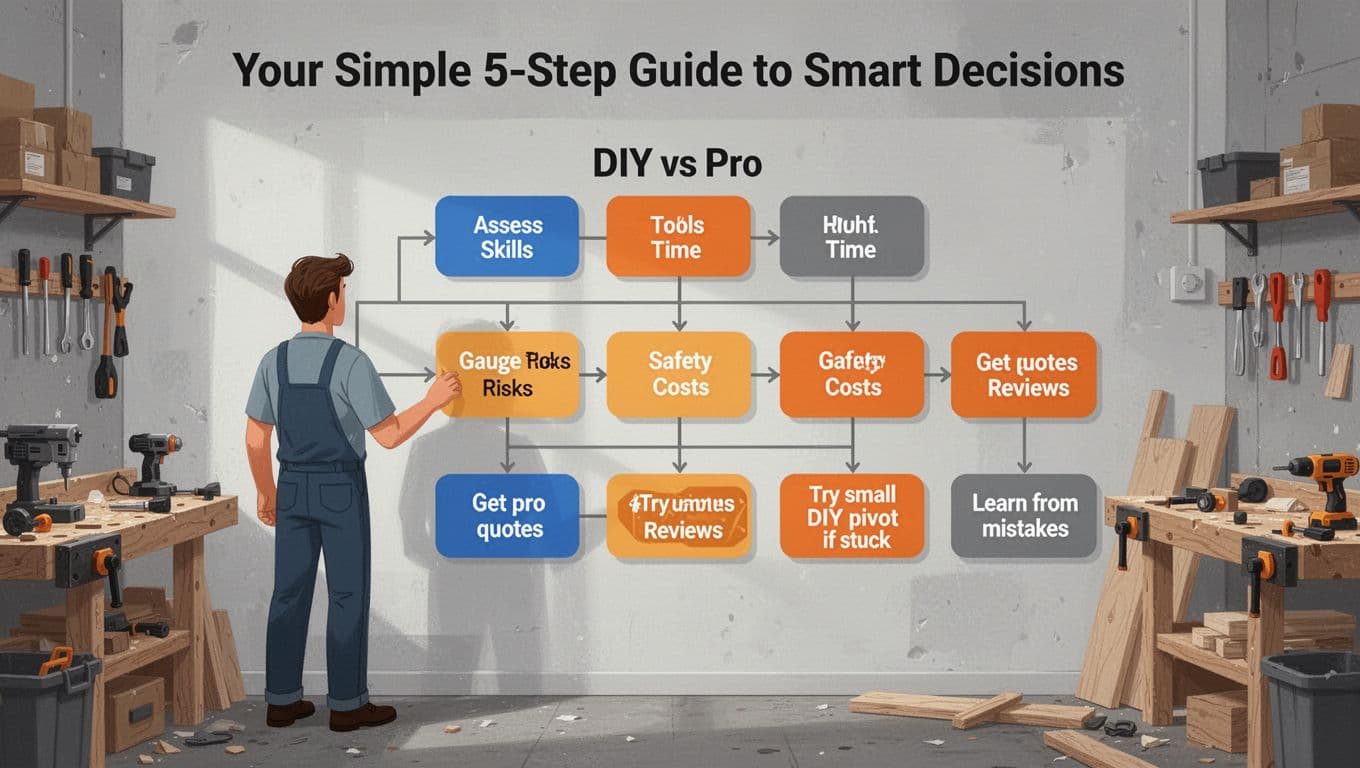
- Assess your skills, tools, and time. List what you know from past jobs. Check if you own the gear or can rent it cheap. Add up hours; pros finish 2-3 times faster. If gaps show, note them now.
- Gauge risks, safety, and money stakes. Ask if mistakes could spark fires, floods, or crashes. Factor in fix costs; DIY fails often double pro fees. High stakes mean skip DIY, as 34% of homeowners do mid-project.
- Get pro quotes and reviews. Shop three bids online or via apps. Read recent feedback on sites like Angi. BuildFolio’s guide outlines when pros beat DIY on permits and safety. Compare totals against your time value.
- Try small DIY first; pivot if stuck. Tackle easy parts, like prepping a paint job. Stop at trouble; call the pro you quoted. This hybrid saves 20-30% on basics with 75% DIY success rates.
- Learn from mistakes or wins. Note what worked. Track savings or lessons in a phone app. Next time gets easier, building your edge.
You hold the power now. Blend both worlds, and you dodge traps while saving cash. Smart moves build confidence fast.
Conclusion
You save 20-30% on simple, low-risk fixes like oil changes or painting. However, pros prevent $500-plus fails on brakes, roofs, or wiring. So, the hybrid approach rules in 2026; start DIY to build skills, then call help early for top results and confidence.
That late-night faucet drip from the start? Follow the 5-step guide next time. You dodge floods and build wins along the way.
Try it on your next issue. Share your DIY story or pro save in the comments below. For more tips, check our guides on car maintenance basics or home painting wins. Smart choices keep you ahead.